How It Works

How Gemmetric turns AI visibility into a repeatable system

AI does not rank your business. It decides whether it can trust it. Gemmetric measures how visible, understandable, and confident AI systems are when they encounter your business online.

Not guesses. Not vibes. Signals you can point to and improve.

The workflow

Five steps. Defensible outputs.

We analyze the same inputs modern AI engines rely on to decide whether to recommend a business. Every step produces evidence, not opinions.

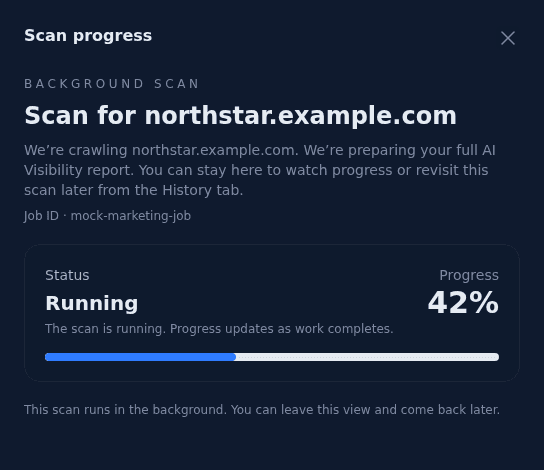
  1. 1) Scan what AI can actually see

    Crawl access and restrictions, HTML structure, semantic clarity, schema coverage, and business identity signals across your site and key public sources.

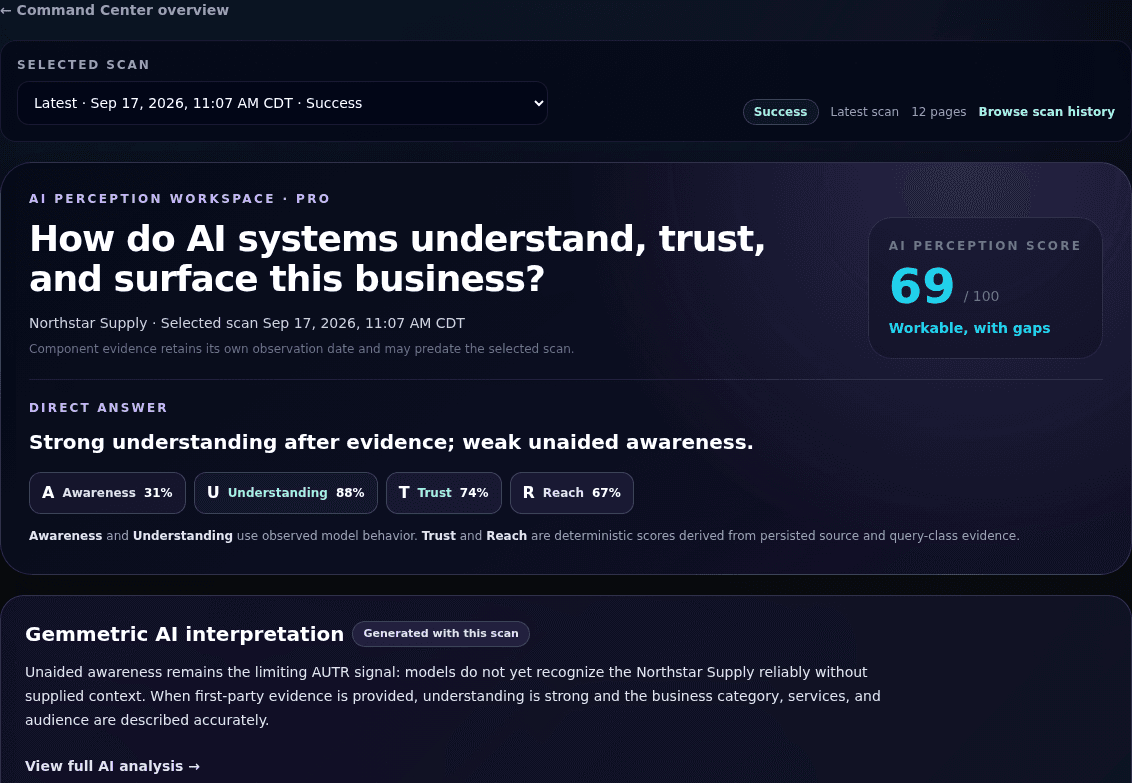
  2. 2) Measure confidence, not just visibility

    Score how certain an AI system can be: clear versus ambiguous signals, verified versus inferred facts, and known versus unknown data points.

  3. 3) Explain why the score is what it is

    See which signals were evaluated, which were missing or blocked, what was unknown due to scan limits, and what evidence supported the result.

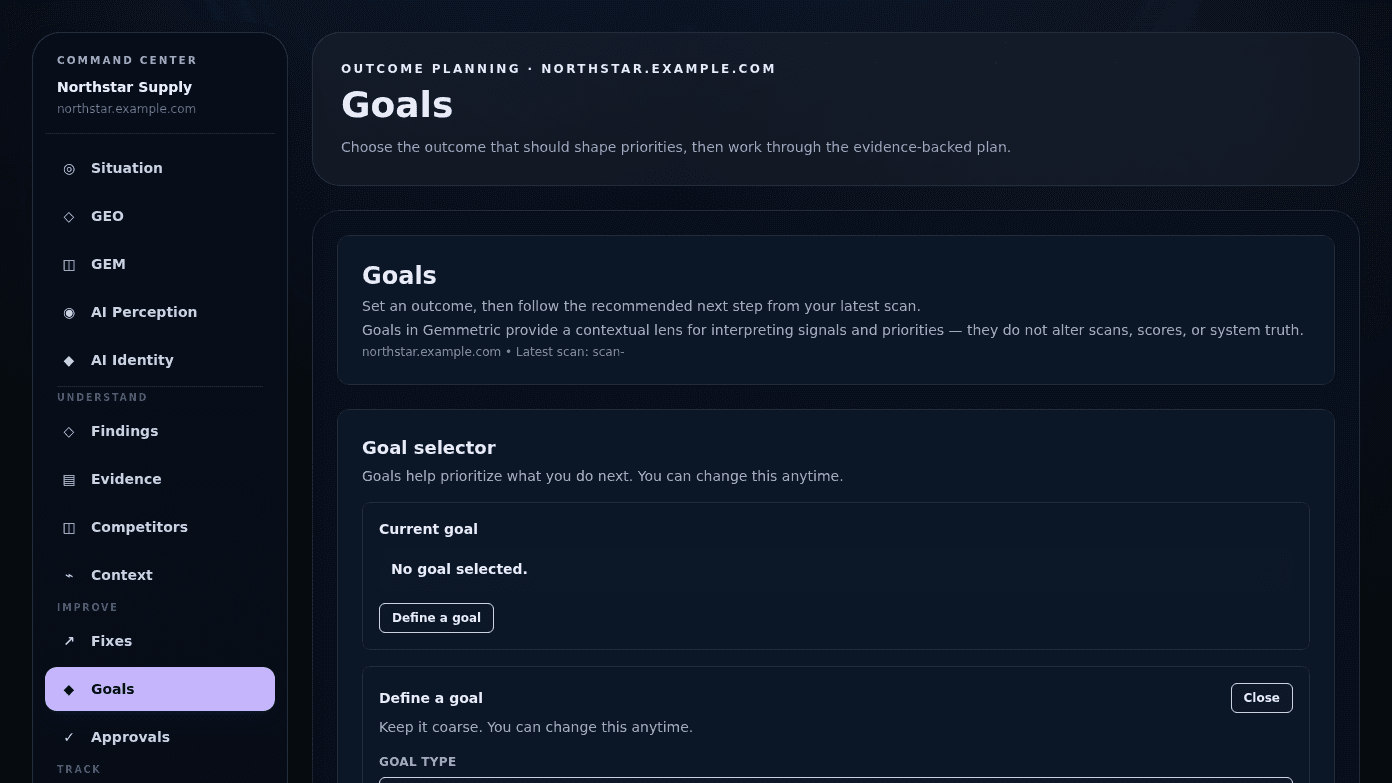
  4. 4) Translate findings into actionable clarity

    Get clear prioritization, trust gaps that cause AI hesitation, structural issues holding you back, and Fix Packs you can deploy.

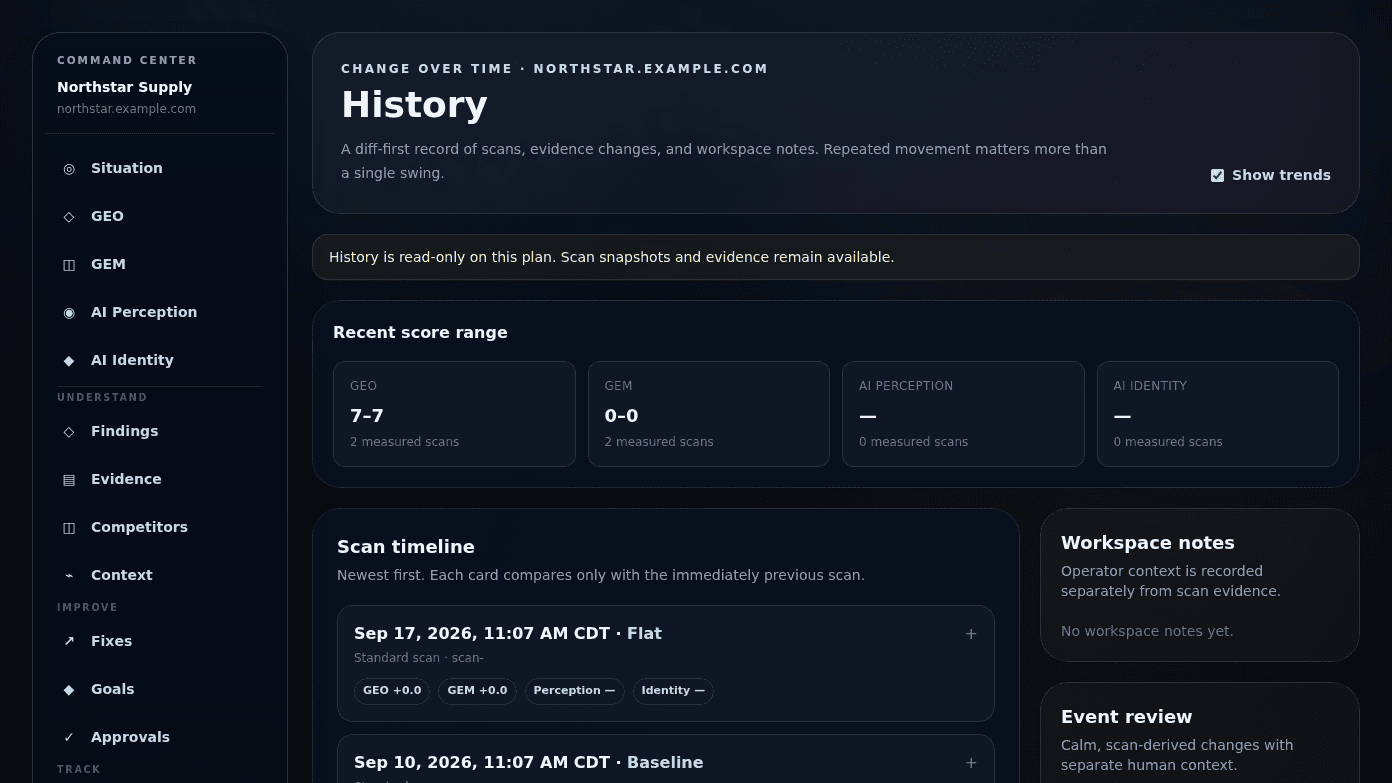
  5. 5) Track progress as AI systems evolve

    Each scan creates a historical snapshot with preserved evidence, trendlines over time, and proof of improvements or regressions.

The questions we answer

Gemmetric is built around the same evaluation loop AI assistants run behind the scenes.

  • Can I crawl this site?
  • Do I understand what this business actually does?
  • Is this information consistent and trustworthy?
  • Should I confidently recommend this business, or hedge?

What you get after a scan

Clear fixes you can apply

You get three explainable scores, signal-level evidence, and Fix Packs with deployable schema and copy. This is designed to plug into a real workflow. Engineers can ship JSON-LD, marketers can update content blocks, and everyone can see the delta after the next scan.

See the workflow →

GEO

Structural clarity

GEM

External verification

Perception

AI interpretation

GEO Score

Schema + headings opportunity

GEM Score

Listings disagree on category

AI Perception

Misidentification risk detected

Answerability

Missing intent coverage

Top Fix Pack (example)

Add LocalBusiness + Service schema, clarify primary category language, and publish an FAQ block aligned to customer intent.

Deployable output

{
  "@context": "https://schema.org",
  "@type": "Organization",
  "name": "Your Business",
  "url": "https://example.com",
  "sameAs": ["https://..."]
}

Fix Packs

Go from audit to deploy without the hand waving

Traditional tools stop at diagnostics. Fix Packs bundle the evidence, the recommended change, and deployable outputs. That usually means JSON-LD, updated metadata, and content blocks written for real intent queries.

See what you get →

What’s wrong (evidence)

  • Missing Service + FAQ schema on key pages
  • Inconsistent primary category language
  • Thin intent coverage for “comparison” queries

The fix (deployable)

  • Generated JSON-LD (Organization / Service / FAQ)
  • SEO-ready copy + metadata updates aligned to intent
  • Priority ordering + estimated impact delta

Export bundle

JSON-LD snippet, copy blocks, CSV diagnostics, and a PDF-ready summary. Everything you need to implement.

What makes Gemmetric different

Built for recommendation, not rankings

Traditional SEO tools assume rankings explain outcomes. Gemmetric measures the signals behind AI confidence and makes them actionable.

Traditional SEO toolsGemmetric
Keyword focusedEntity and trust focused
Ranking assumptionsConfidence measurement
Black box scoresExplainable signals
Optimized for humansOptimized for AI systems
Traffic thinkingRecommendation thinking

The bottom line

When an AI is asked about your business, how confident is it, really? Gemmetric gives you the honest answer, the evidence, and the fixes to improve it.