Product

A platform for getting surfaced in AI answers.

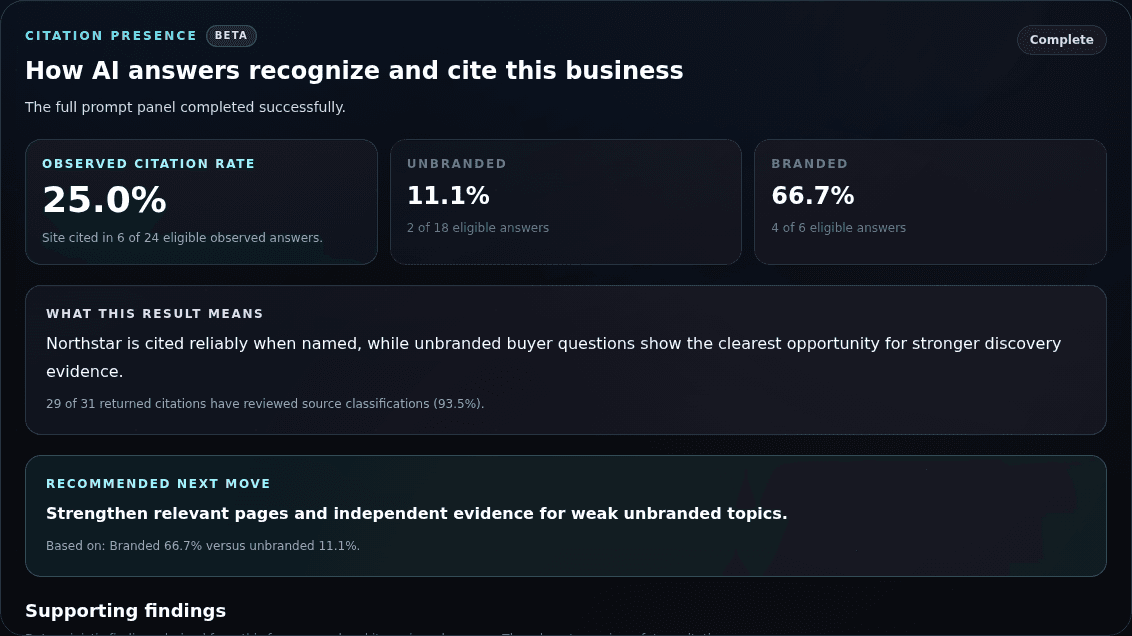
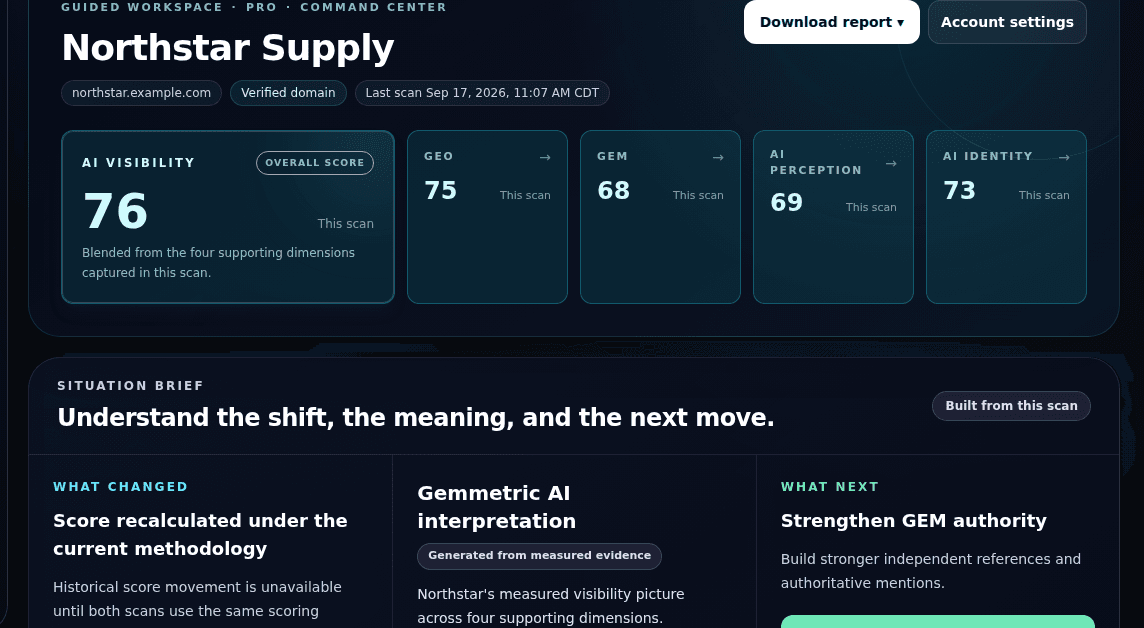
Gemmetric measures GEO (on-site readiness) and GEM (model strength) and rolls them into AI Visibility—then turns the gaps into fixes you can deploy.

Think structure + schema, model strength (awareness, understanding, trust, and reach), AI Perception risk, and deltas you can track over time.

Private beta: we review requests and invite teams as capacity opens.

Core signals

AI Visibility is a roll-up of GEO + GEM

GEO measures on-site readiness. GEM measures model strength. Together, they determine how likely you are to be surfaced in AI answers.

GEO

Generative Entity Optimization

On-site readiness: structure, metadata, schema, and intent coverage.

GEM

Generative Entity Model

Model strength: awareness, understanding, trust, and reach.

AI Visibility

Roll-up score

Overall likelihood to be surfaced in AI answers—computed as a roll-up of GEO + GEM.

What you get after a scan

Clear fixes you can apply

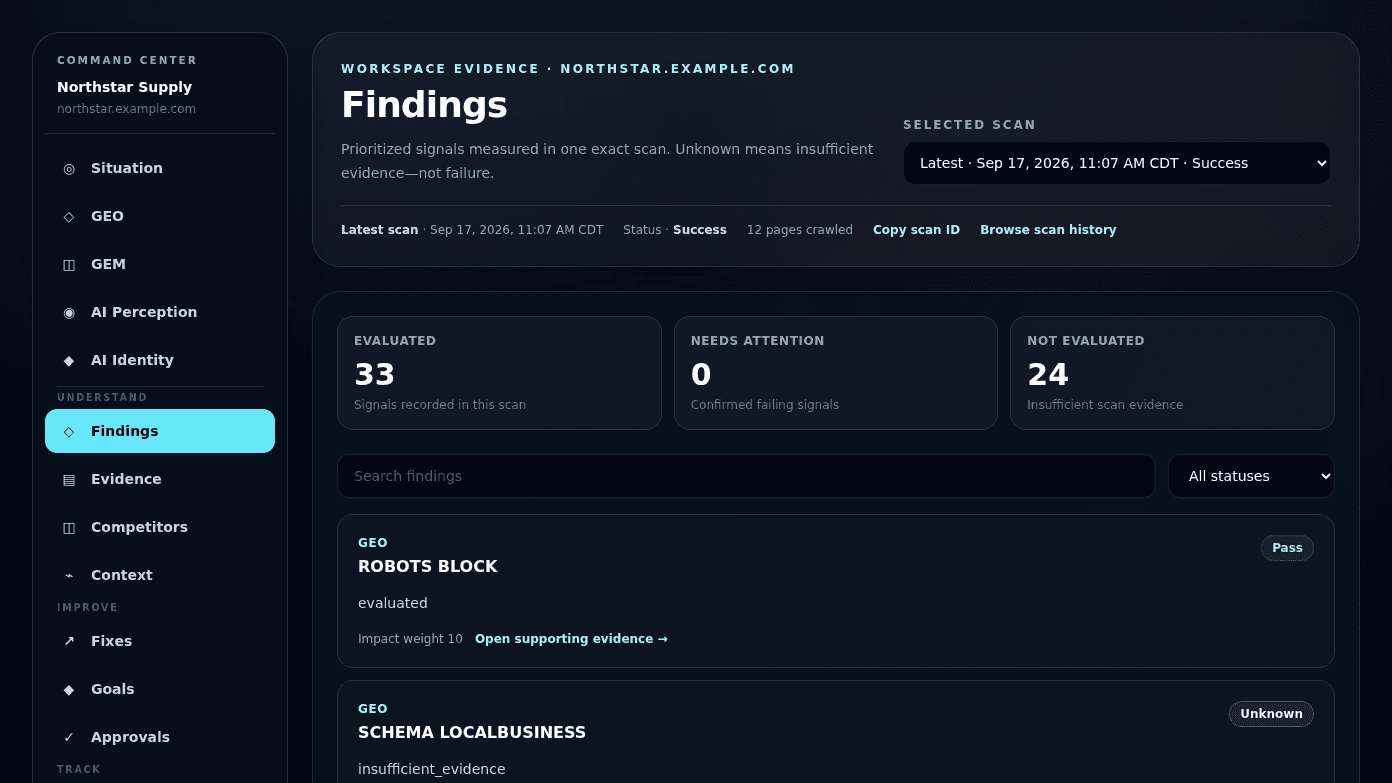
You get core signal scores (GEO, GEM, and AI Visibility), diagnostics like AI Perception, and Fix Packs with deployable schema and copy. This is designed to plug into a real workflow. Engineers can ship JSON-LD, marketers can update content blocks, and everyone can see the delta after the next scan.

See the workflow →

GEO

On-site readiness

GEM

Model strength

Awareness • Understanding • Trust • Reach

AI Visibility

Roll-up of GEO + GEM

GEO Score

Schema + metadata opportunity

GEM Score

Trust + reach gaps detected

AI Visibility Score

Roll-up of GEO + GEM

AI Perception

Misidentification risk detected

Top Fix Pack (example)

Add LocalBusiness + Service schema, clarify primary category language, and publish an FAQ block aligned to customer intent.

Deployable output

{
  "@context": "https://schema.org",
  "@type": "Organization",
  "name": "Your Business",
  "url": "https://example.com",
  "sameAs": ["https://..."]
}

Fix Packs

Go from audit to deploy without the hand waving

Traditional tools stop at diagnostics. Fix Packs bundle the evidence, the recommended change, and deployable outputs. That usually means GEO fixes (JSON-LD, metadata, intent coverage) and GEM fixes (actions that improve model strength by improving the inputs that influence it—especially trust and reach—plus copy written for real intent queries.

See what you get →

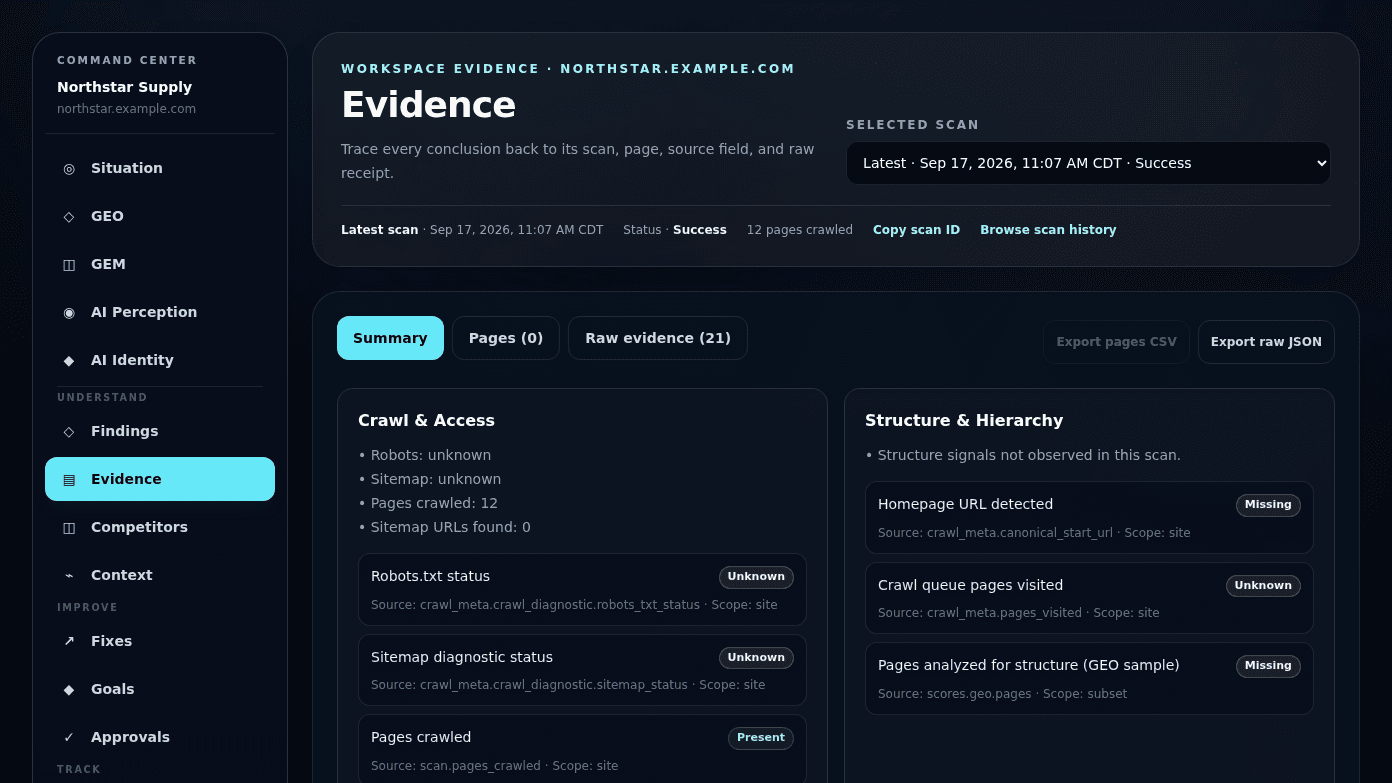
What’s wrong (evidence)

  • Missing Service + FAQ schema on key pages
  • Inconsistent primary category language
  • Thin intent coverage for “comparison” queries

The fix (deployable)

  • GEO fixes: JSON-LD + metadata + intent-aligned copy
  • GEM fixes: inputs that influence model strength (especially trust + reach)
  • Priority ordering + estimated impact delta

Export bundle

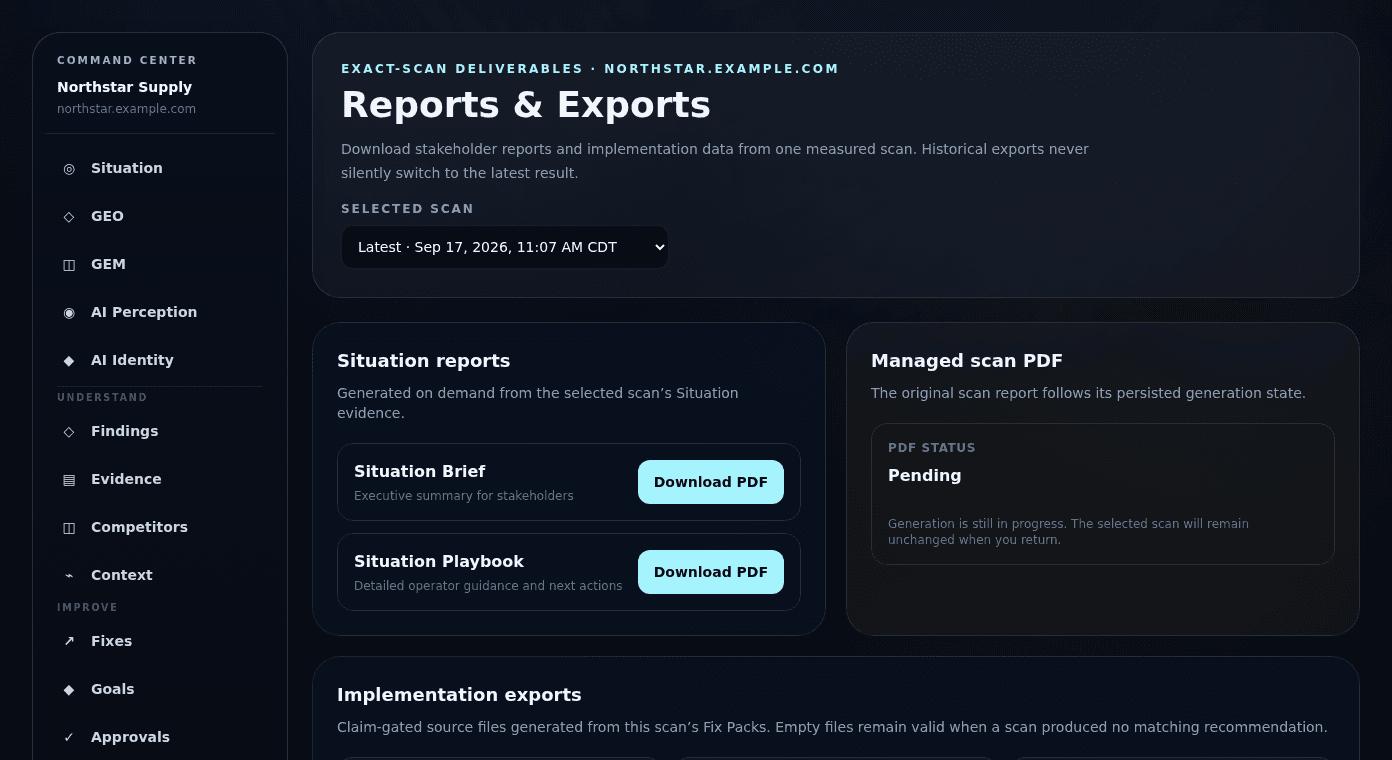
JSON-LD snippet, copy blocks, CSV diagnostics, and a PDF-ready summary. Everything you need to implement.

Exports

Outputs teams can ship.

You should not need to translate a report into tasks. Outputs map directly to GEO and GEM fixes so teams can ship improvements without extra interpretation.

JSON-LD for Organization, LocalBusiness, Service, FAQ, and other schema needs.
Copy blocks and metadata updates written for real intent queries.
CSV exports for diagnostics, sources, and competitive deltas.
PDF-ready summaries for stakeholders and clients.